Comparison Between Diatomite Dry Mat and Composite Diatomite Non-woven Fabric Mat
In the usage scenario of dry mats, diatomite dry mats and composite diatomite non-woven fabric mats are two common choices. The composite diatomite non-woven fabric mat uses composite diatomite non-woven fabric as the intermediate layer. Compared with traditional diatomite dry mats, there are differences in structure, performance, and application scenarios between the two.
一. Structural Composition
Diatomite dry mat: This mat is usually composed of diatomite particles as the main drying material. Its structure is relatively simple. Diatomite particles have porosity and can adsorb water. In some designs, diatomite particles may be mixed with other auxiliary materials to enhance performance.
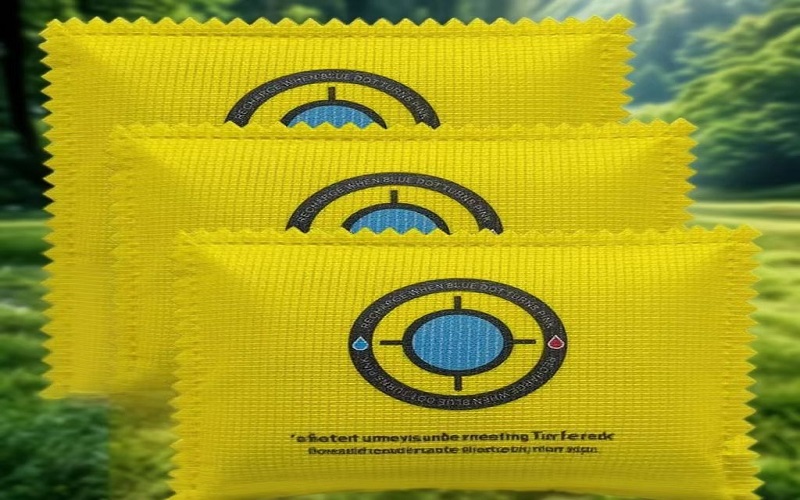
Composite diatomite non-woven fabric mat: This dry mat adopts a composite structure, with a middle layer of composite diatomite non-woven fabric. Its outer layer is usually composed of other materials, used to improve aesthetics and provide support and protection while enhancing overall water absorption and breathability. The composite diatomite non-woven fabric layer combines the moisture absorption and adsorption properties of composite diatomite with the structural advantages of non-woven fabric, forming a more complex multi-layer structure.
二. Performance Characteristics
1. Moisture absorption performance
Diatomite dry mat: Diatomite has strong hygroscopicity and can effectively absorb moisture from the air. Its porous structure allows moisture to penetrate deep into the interior, achieving a good drying effect.
Composite diatomite non-woven fabric mat: The multi-material complementarity of composite diatomite fusion moisture-absorbing and locking materials, combined with the shape of non-woven fabric, has stronger moisture absorption performance and high moisture content and locking ability. The fiber structure of non-woven fabric can quickly guide moisture to reach the composite diatomite layer, improving moisture absorption efficiency.
2. Breathability
Diatomite dry mat: The breathability is relatively weak because the accumulation of diatomite particles may form a certain dense layer, which hinders air circulation.
Composite diatomite non-woven fabric mat: The multi-layer structural characteristics of composite diatomite non-woven fabric mat, as well as the presence of non-woven fabric layers, make it more breathable than pure diatomite dry mats. The fiber gaps in non-woven fabric allow for free air circulation, improving the overall breathability.
3. Durability
Diatomite dry mat: Diatomite particles may gradually lose their adsorption capacity and are prone to breakage during repeated use. Its durability is relatively poor.
Composite diatomite non-woven fabric mat: The composite structure has more advantages in durability. The non-woven fabric layer can protect against the wear and breakage of composite diatomite during use, extending their service life.
4. Antibacterial performance
Diatomite dry mat: Diatomite itself has certain antibacterial properties, which can inhibit the growth of bacteria and mites.
Composite diatomite non-woven fabric mat: In addition to the antibacterial effect of composite diatomite itself, the non-woven fabric layer can further enhance the antibacterial effect. If antibacterial technology is applied to non-woven fabrics, they can have additional sterilization functions.
三. Application Scenarios
Diatomite dry mat: Due to its simple structure and low cost, it is suitable for environments that absorb moisture, but attention should be paid to its difficulty in cleaning to avoid hygiene problems.
Composite diatomite non-woven fabric mat: Due to its multifunctionality and composability, when combined with other materials, it can adapt to more environments and is suitable for a wider range of scenarios.
四. Conclusion
Diatomite dry mat and composite diatomite non-woven fabric mat each have their own advantages and disadvantages. Diatomite dry mat has a simple structure and low cost. Composite diatomite non-woven fabric mat has more comprehensive performance, better moisture absorption, breathability, and durability, and can adapt to more scenarios and environments. Users can choose suitable products based on their actual needs.